The Washing (1957)
the rhythm of life
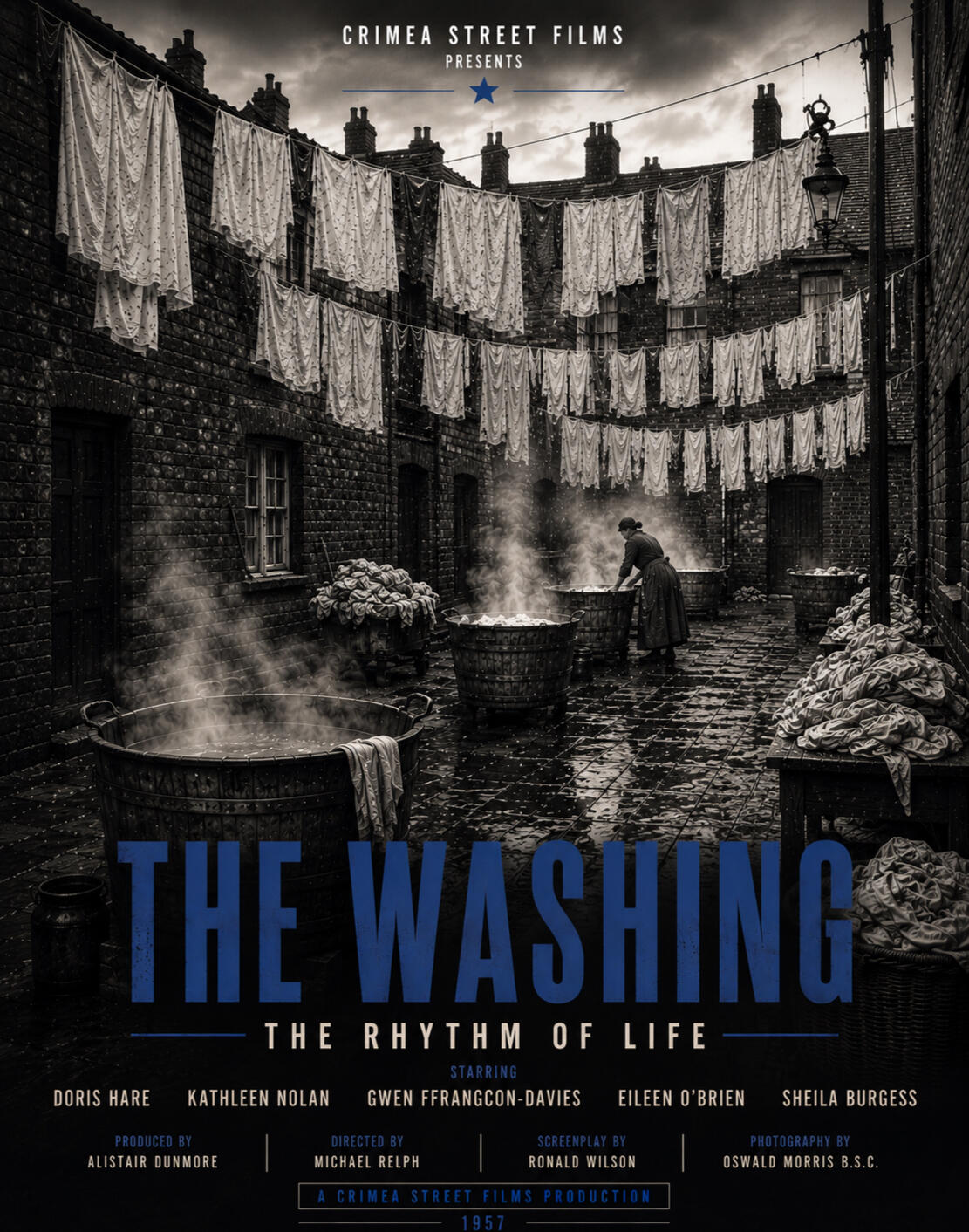
Released in early 1957, The Washing was the first feature-length production completed by Crimea Street Films and the film that established much of the studio's distinctive character.Directed by Alistair Dunmore, it transformed the everyday routines of a communal wash yard into an intimate portrait of working-class life, where friendships were formed, secrets exchanged and lives quietly intertwined beneath lines of damp washing.Set in an unnamed northern town, the story follows several women whose paths cross through the daily rituals of washing, drying and mending.Rather than relying on a single central character, the narrative moves between neighbouring households, revealing small acts of kindness, long-standing rivalries and the quiet struggles of ordinary families trying to make ends meet.
Dunmore later claimed he became fascinated by communal wash yards because they were places where an entire community could gather without ever intending to. He believed people were often more honest when occupied with practical tasks than they were sitting across a table from one another, an idea that runs throughout the film.
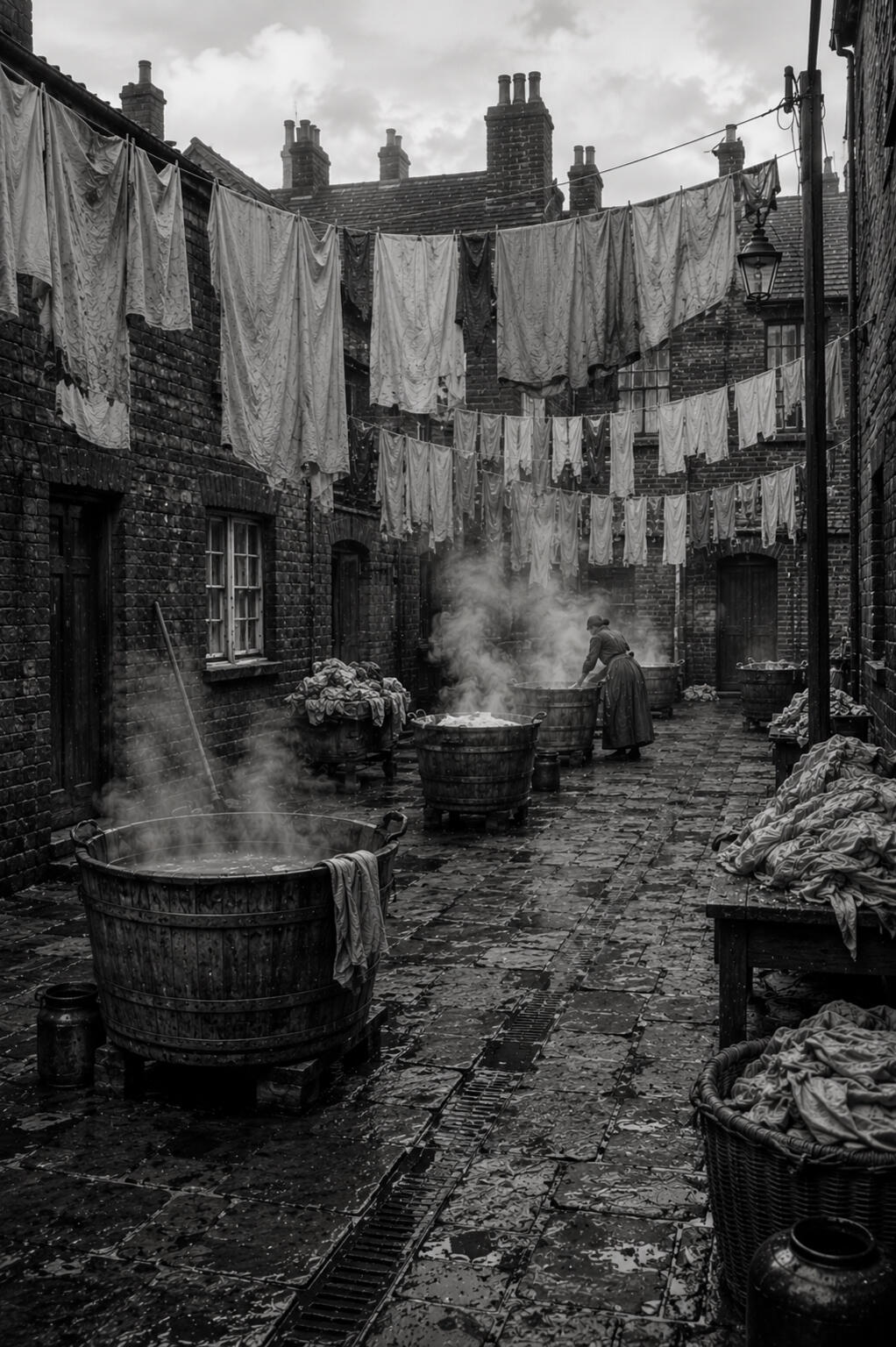
Set in an unnamed northern industrial town, The Washing follows the lives of several women whose daily routines bring them together in a communal wash yard. Against a backdrop of steaming wash tubs and endless lines of drying sheets, friendships are forged, old grievances resurface and private struggles gradually emerge.Rather than focusing on a single central character, the film moves between neighbouring households, revealing the quiet dramas of working life, family responsibility and the bonds that hold a community together. Through ordinary acts of labour, Alistair Dunmore's first feature explores resilience, companionship and the dignity to be found in everyday life.
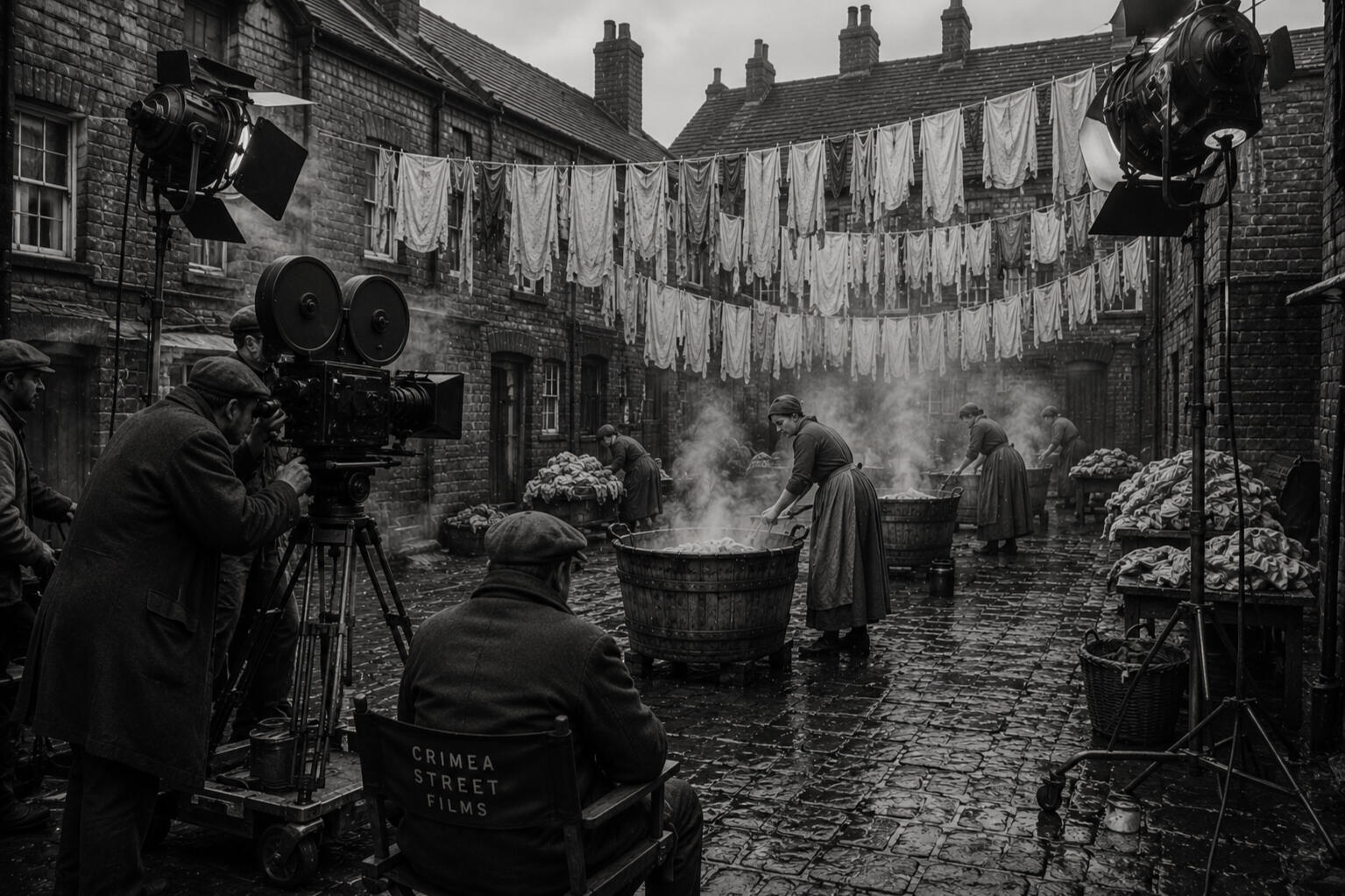
Making The WashingFilming began during the winter of 1956–57, with much of the production taking place on location in a working terraced courtyard.The choice of setting reflected Alistair Dunmore's determination to place ordinary working lives at the centre of the story.The production quickly encountered practical difficulties. Large wash tubs filled with hot water created dense clouds of steam that frequently obscured both performers and camera equipment.Rather than delay filming, cinematographer W. H. Mitchell incorporated the effect into the visual style of the picture.To achieve authenticity, many of the props were borrowed from local households, including washboards, wicker baskets and hand-operated mangles.Residents were reportedly amused that their weekly routines had become the subject of a feature film.
Dunmore encouraged the cast to carry out genuine washing and laundry work during scenes rather than simply imitate the actions. He believed that the natural rhythms of labour produced more convincing performances than carefully choreographed movements.Several cast members later recalled that the long hours spent standing in the cold and damp conditions made The Washing one of the most physically demanding productions undertaken by the young Crimea Street Films studio, though many regarded it as one of its happiest shoots.
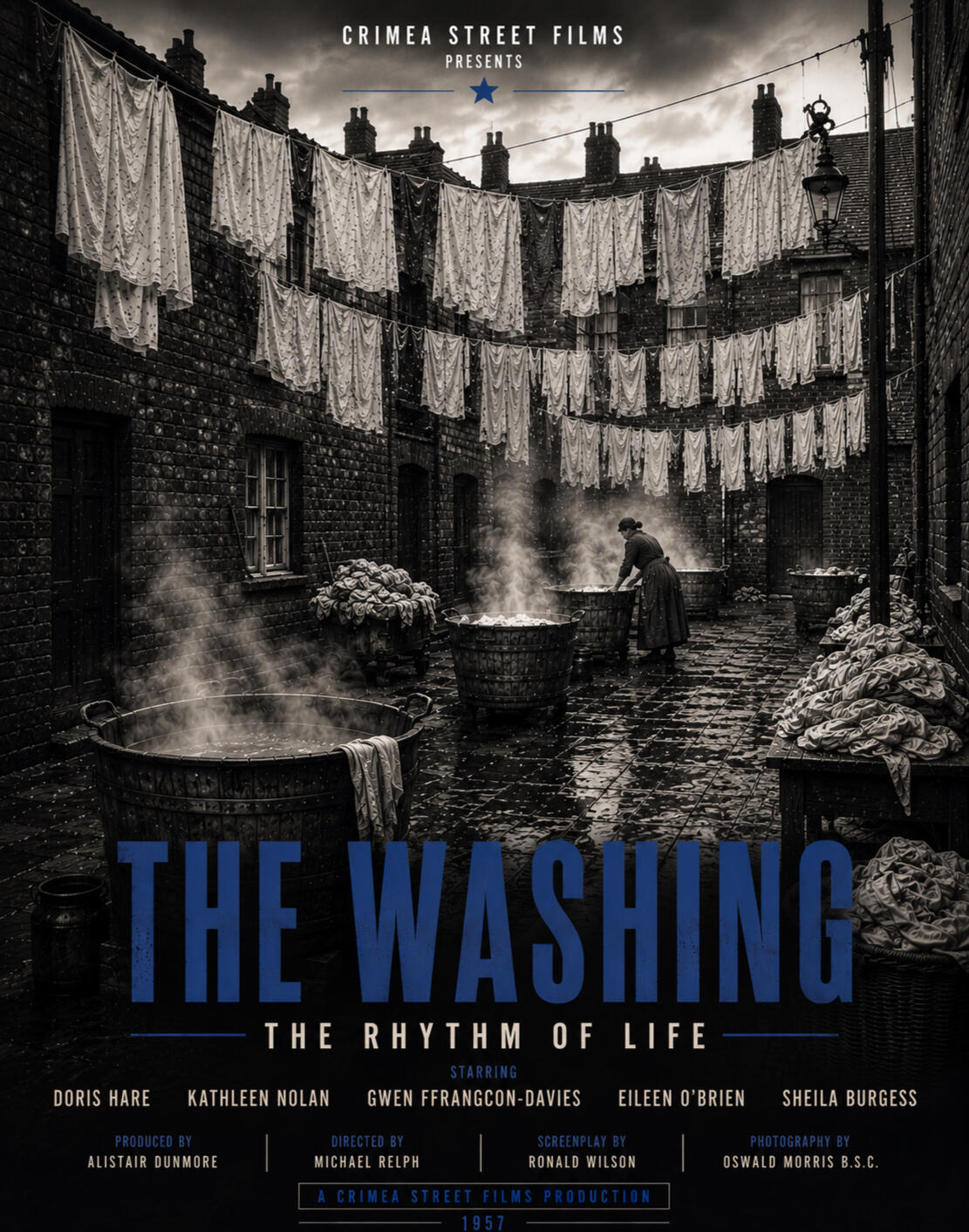
The PosterThe surviving poster for The Washing presents one of the more curious mysteries associated with Crimea Street Films. Designed by the studio's long-serving publicity artist Reg Baines, it features the names of several well-known British and American performers who never appeared in the finished production.Film historians generally believe that Baines habitually used the names of established stars as placeholders while developing his layouts, partly to judge the balance of the typography and partly as a private joke. The genuine cast list would be substituted once contracts had been finalised.Unfortunately, no confirmed final version of the The Washing poster is known to have survived. As a result, the Baines working proof has become the image most closely associated with the film and remains one of the more unusual pieces of Crimea Street Films memorabilia.
Contemporary ReceptionWhen The Washing opened in the spring of 1957, critics found themselves divided by its unconventional subject matter. While some praised Alistair Dunmore's ability to uncover drama in the routines of everyday life, others questioned whether the ordinary activities of a communal wash yard could sustain a feature-length film.The Manchester Evening Chronicle offered one of the warmest reviews, describing the production as:"A remarkably observant picture that discovers drama in places most filmmakers would never think to look."The Yorkshire Post was similarly impressed by the film's attention to detail, commenting:"The labour itself becomes the narrative. The repetition is the point."Not everyone was convinced. The Daily Sketch famously dismissed the production as:"An entire feature devoted to washing and waiting for washing to dry."Even many of the less enthusiastic reviews, however, acknowledged the film's striking visual style. Particular praise was directed towards the atmospheric cinematography and Margaret Ellis's understated performance as Annie Walsh, with one critic observing that she "communicates more through hanging sheets than many performers achieve through pages of script."Although critical opinion remained mixed, The Washing attracted a loyal audience in several northern cities and established Crimea Street Films as a studio willing to find compelling stories in the overlooked corners of everyday life.
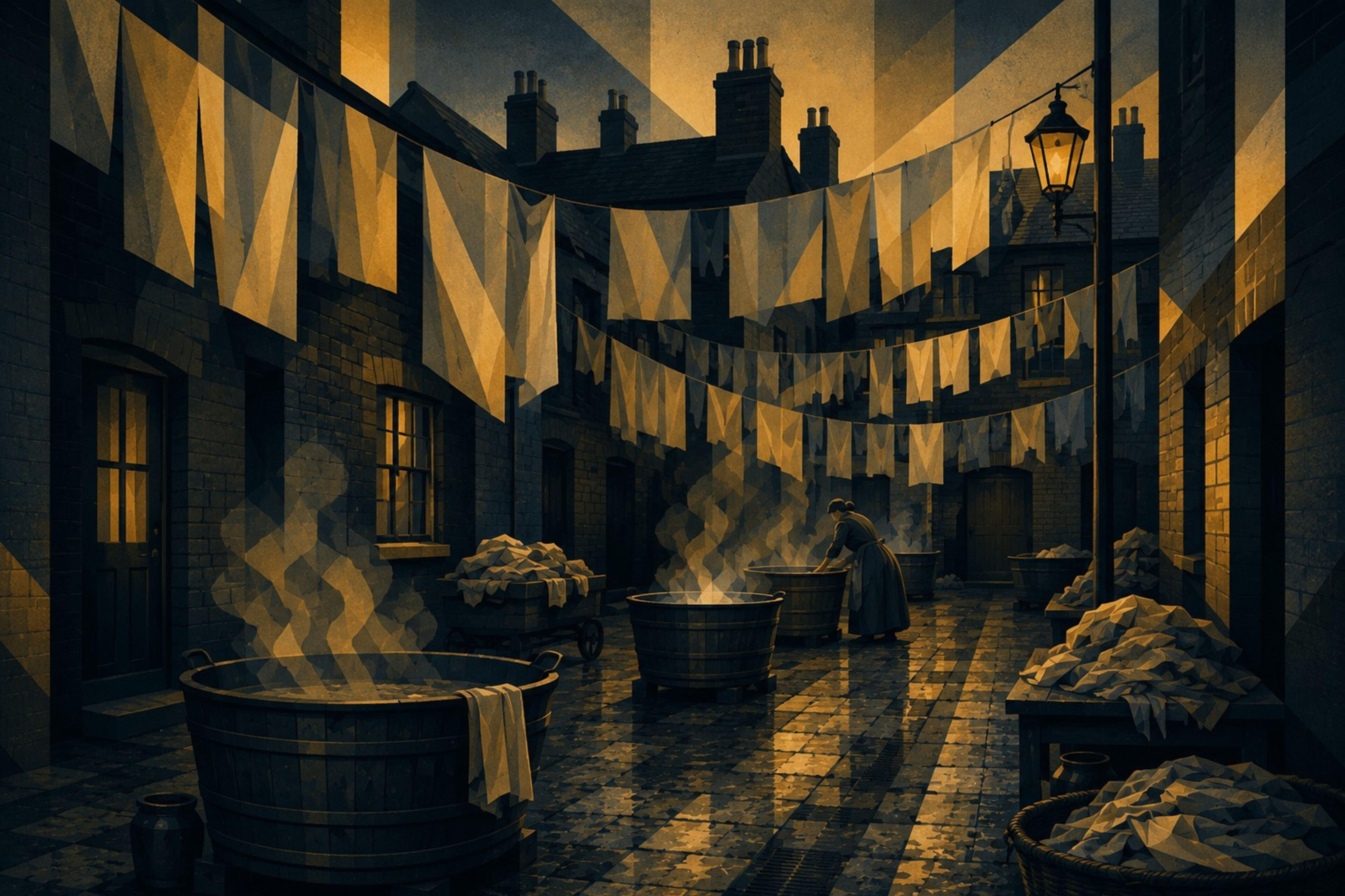
The Washing (Northern Deco)Olive James' interpretation of The Washing forms part of her ongoing exploration of the visual legacy of Crimea Street Films.Retaining the familiar wash yard, steaming tubs and hanging sheets, the work reimagines Dunmore's industrial realism through the bold geometry and warm palette of the Northern Deco movement.
From the ArchiveA surviving production note from Crimea Street Films records that Dunmore instructed the cast to continue ordinary conversations between takes, believing the best moments occurred when nobody thought they were acting.